Bakken Resources Sells Bakken Acreage ~$7.9 Million

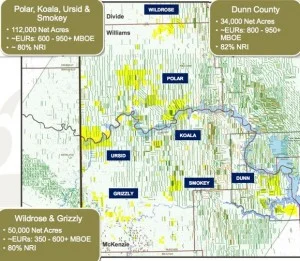
McKenzie County, ND
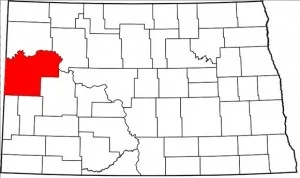
McKenzie County, ND

Bakken Resources Inc. sold 767 net acres in McKenzie County, ND to an undisclosed buyer in early February 2014.

Total purchase price for the acreage was $7,871,248. That comes out to $10,250 per net mineral acre.

Notable Bakken Acquisitions and Divestitures in January 2014

So far in 2014, there have been at least two other acreage deals in the Bakken.

Emerald Oil acquired 20,800 net acres in the Williston Basin for $74.6 million in two separate deals in early January.

Read more: Emerald Acquires Bakken Acreage in the Williston for $74.6 Million

Oasis had a $333 million sale in January of its’ non-operated Sanish properties and a few non-operated leases adjacent to the Sanish.

Read more: Oasis Sells Bakken Acreage - Strong Production Growth in 2014

Bakken Resources Gains ~412% Return on Investment

With the closing of its' acreage deal, Bakken Resources gains a ~412% percent return on its original investment. In November of 2010, the company spent $1,535,000 for the 767 net acres in McKenzie County.

Bakken Resources will retain a 2% royalty interest in the sold assets.

We are very pleased about this win-win transaction,” notes Val Holms, CEO. “Proceeds from this transaction will allow us to seriously explore several other opportunities we are currently evaluating. We continue to hold a 2% royalty interest in the assets we sold and also receive royalties on our remaining 1,600 +/- net mineral acres located in Bakken region.

Bakken Resources is a non-operator, and prior to this deal, the company owned mineral rights to approximately 7,200 gross acres and 2,400 net mineral acres of land in North Dakota.

Bakken Resources Acreage Deal Highlights

  • 767 net mineral acres sold in McKenzie County, ND
  • $10,250 per net mineral acre
  • Total price for deal is $7,871,248
  • ~412% increase on original investment of $1,535,000 in Nov. 2010

Read the full release: Bakken Resources Inc. Acreage Deal

Continental's Proved Reserves in Bakken Valued at $14.5 Billion - 2013

Continental 2014 Production
Continental 2013 Production

Continental's proved reserves stretched to more than 1 Billion boe in 2013, with an estimated value of more than $20 billion. The Bakken accounted for 72% of the volume and it's estimated value.

Continental's Bakken and Three Forks position contributed 741 million boe to the company's proved reserves at an estimated value of $14.5 billion.

Within the proved reserve estimates, Continental had 2,330 gross  (1,302 net) PUD (proved undeveloped) drilling locations at the end of 2013. According to the company, the Bakken accounted for about 84% or almost 1,100 PUD locations.

Read moreContinental's Bakken & Three Forks Density Test Yields Almost 15,000 boe/d

Continental Resources Company-Wide Production

Continental Resources had total production of 49.6 million boe or~136,000 boe/d in 2013. That's up 39% from a little less than 100,000 boe/d 2012. 71% of the 2014 total came from crude oil at 35 mmbbls and 29% came from natural gas at 87.7 bcf.

Average production during the fourth-quarter of 2013 was 144,250 boe/d. That's up ~2% from the third-quarter of 2013.

Harold Hamm, CEO, said, “We accomplished our key 2013 goals across the board – to generate top-tier organic oil production growth; to improve efficiency while reducing drilling and completion costs; and to delineate the lower benches of the Bakken and southern portions of the South Central Oklahoma Oil Province, or SCOOP.

Continental Resources Reserves

In 2013, Continental PDP (proved developed producing) reserves exceeded 400 million boe. At the end of the year, Continental had 2,330 gross acres (1,302 net) of PUD (proved undeveloped locations). Continental's year end 2013 proved reserves had an estimated net present value of $20.2 billion. That’s a 52% increase from 2012 estimates of proved reserves at $13.3 billion.

Continental Highlights

  •  72% of net present value for proved reserves come from the Bakken - 741 mmboe at $14.5 billion
  • 84% of Continental's PUD (proved undeveloped locations) are in the Bakken
  • Company-wide total production of 49.6 mmboe in 2013
  • Q4 company-wide production of 144,250 boe/d

Read more at contres.com

Kodiak Oil & Gas 2013 Bakken Sales Volumes Up 103% in 2013 from 2012

Kodiak Oil & Gas Williston Basin Map

Kodiak's average daily sales volume in the Bakken went up 98% to 36,100 boe/d in the fourth-quarter of 2013 from 18,200 boe/d in the fourth-quarter of 2012. Crude oil made up most of the company's sales volume at 89% in the fourth-quarter.

Average daily sales volumes increased 103% for the year to 29,200 boe/d in 2013 from 14,400 boe/d in 2012.

Kodiak Bakken Acquisitions and Drilling Operations in 2013

In 2013, Kodiak invested approximately $672 million on acquisitions net of divestitures in the Bakken. In June 2013, Kodiak Oil & Gas signed a purchase and sale agreement with Liberty Resources for 42,000 net acres in the Williston Basin for $660 million.

The acquisition included acreage prospective for the Bakken and Three Forks formations in McKenzie and Williams counties.

Read more:Kodiak Buying Bakken Assets from Liberty Resources For $660 Million

For the full year 2013, Kodiak invested ~ $1.0 billion in capital expenditures for drilling and completing new wells, including surface facilities and pipeline connections in the Bakken. In the fourth-quarter of 2013, the company completed 29 gross (21.9 net) operated wells and 40 gross (4.0 net) non-operated wells. Currently, Kodiak has 7 operated rigs in the Williston Basin.

Kodiak Bakken Reserves

Kodiak estimates the value of its proved total reserves increased from $1.9 billion in 2012 to $3.5 billion at the end of the year in 2013. That's an 81% increase.

The company's estimated proved reserves increased 77% to 167.3 million boe from 94.7 million boe in 2012. Total proved crude oil reserves are 138.2 million bbl crude oil and total natural gas reserves of 174 bcf natural gas.

Lynn Peterson, Chairman and CEO said: “Last year was another exciting year for Kodiak and its shareholders. Our team did a tremendous job of delivering outstanding operating results and reserve growth while, at the same time, we materially expanded our future drilling inventory through downspacing work and an acquisition. In 2014, our focus continues to be on determining the optimum development blueprint for our leasehold while delivering operational excellence.

Make-up of Kodiak's Proved Reserves at the end of year 2013:

  • 138.2 million bbl crude oil (83%)
  • 174 bcf natural gas (17%)
  • 46% of 2013 proved reserves are developed and producing
  • 54% of 2013 proved reserves are undeveloped

Of the 54% of proved reserves that are undeveloped, Kodiak estimates those properties are a 2.5 year drilling inventory.

QEP Resources South Antelope Bakken Properties Valued at $2.8 Billion at Year-end 2013

QEP Resources Bakken Three Forks Acreage Map

QEP Resources acquired its South Antelope Properties in the fall of 2012 for ~$1.4 billion.

Since the acquisition, QEP's value estimate for those properties has increased to $2.8 billion based on probable reserve estimates.

Read more: QEP - Helis Bakken Deal Agreed for 27,600 Acres for $1.4 Billion

QEP Bakken South Antelope Properties

Since the acquisition of its South Antelope properties, QEP has lowered its development costs and increased production.

Current gross completed well costs have decreased by more than $1 million from estimated costs at the time of acquisition.

In spite of delays due to downstream and weather-related issues, current South Antelope oil production grew in 2013.

Our South Antelope acquisition is a great example of our sound and stringent capital allocation process,” commented Stanley. “We are pleased to see that the assumptions made in our South Antelope acquisition have proven to be accurate and conservative.

QEP Production and Proved Reserves for 2013

QEP total equivalent production in 2013 was 309 bcfe and oil production was 10.2 million bbl. Natural gas and NGL production was 218.9 bcf and 4.8 million bbl respectively.

2013 year end total proved reserves were 2.55 tcf of natural gas, 148.6 million bbl of crude oil and 102.6 million bbl of NGL. That's a 37% increase of total proved reserves at year end 2013 compared to 2012.

At the end of 2013, QEP's Williston Basin proved reserves were estimated at 797.5 bcfe or ~140 million boe.

Highlights

  • QEP Resources South Antelope property valued at $2.8 billion
  • QEP total equivalent production in 2013 was 309 bcfe and oil production was 10.2 million bbl
  • Proved crude oil reserves at 149 million barrels. Up 25% from prior year
  • 37% increase in total proved reserves
  • Williston Basin contributed more than 140 million boe in reserves

* Extensions and Discoveries: As to any period, the increases to proved reserves from all sources other than the acquisition of proved properties or revisions of previous estimates.

Read more at QEP.com

Hess, Marathon, and Whiting Face Fines for Bakken Oil Classifications

Oil Rail Car Image
Oil Rail Car Image

Hess, Marthon Oil, and Whiting Petroleum all face potential fines from the Pipeline and Hazardous Materials Safety Administration (PHMSA). The fines are being pursued as a result of PHMSA's investigation into the transportation of Bakken oil.

Oil taken from cargo tanks en route to rail facilities in the region was not properly classified. PHMSA took 18 samples from cargo tanks, storage tanks, and pipelines. In all, 11 of the 18 samples were not classified properly.

Hess faces fines of more than $50,000, Marathon Oil faces ~$30,000 in fines, and Whiting faces $12,000 in fines.

Also read:DOT's Arm Issues Bakken Sahle Oil Shipping Safety Alert

Transportation has an important role to play in helping meet our country’s energy needs, thanks to the increased production of crude oil, but our top priority is ensuring that it is transported safely,” said Transportation Secretary Anthony Foxx. “The fines we are proposing today should send a message to everyone involved in the shipment of crude oil: You must test and classify this material properly if you want to use our transportation system to ship it.

PHMSA requires the use of nine hazardous materials classifications. Proper classification ensures the material is handled properly and that emergency responders can accurately assess accidents.

As a result of the findings, PHMSA has expanded the scope of the testing to include testing for proper vapor pressure characterizations, corrosivity, hydrogen sulfide, and concentration of dissolved gases.

http://phmsa.dot.gov/