Will Continental's Reserves Cross 1 Billion Boe in 2013?

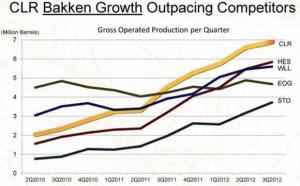
Continental Resources Bakken Production

Continental Resources Bakken assets account for 86% of the company's provded undeveloped (PUD) reserves. That's important because the company just reported proved reserves growth of 54%, an increase from 564 mmboe to 785 mmboe. Over 200 mmboe were added through exploration and development activity and over 80 mmboe were added through acquisitions.

Continental's (CLR) reserves have grown an average of 45% each year since 2009. If that trend continues, Continental will book more than 1.1 BILLION boe at the end of 2013!

"We continue to increase our concentration in high-value, high-growth, crude oil assets, especially in the Bakken," said Harold Hamm, Chairman and Chief Executive Officer. "We are growing the value of our Bakken assets through strategic acquisitions, exploration, and the expanded use of pad drilling, which should improve efficiencies and translate into even better rates of return."

Other items of note from the company's reserves press release include:

  • 39% of CLR's proved reserves are proved, developed and producing (PDP)
  • Crude oil accounts for 72% of reserves (up from 64% at year-end 2011)
  • CLR operates 85% of its proved reserves
  • Increased the company's Bakken position by 24% in 2012 (~900,000 acres to >1.1 million acres)
  • Total of 1,763 gross (982 net) PUD locations (86% Bakken)
  • First reserve bookings from the lower benches of the Bakken-Three Forks

If oil prices hold strong, it looks like 2013 will be another great year for Continental.

Bakken Natural Gas Flaring Should Continue to Fall

Bakken Natural Gas Flaring

Bakken natural gas flaring has risen over the past few years as drilling expanded across North Dakota and Eastern Montana. Flaring hit a peak at the end of 2008, declined through 2009, and has been increasing since that point. Currently, 30-35% of natural gas produced in North Dakota is flared.

Operators are focused on producing oil and have largely defaulted to waiting for infrastructure when it comes to natural gas. Oil accounts for approximately 90% of the production stream in a Bakken well and can be transported by truck or rail, in addition to pipelines. Natural gas, on the other hand, needs a pipe and in North Dakota it needs processing plants. Natural gas produced from the Bakken yields 8-13 gallons of NGLs per mcf (gpm).

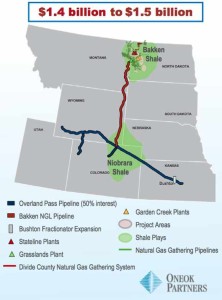
Rich gas and a positive production outlook are why Oneok plans to add the Garden Creek III processing plant. When the plant is completed in 2015, the company will have almost 600 mmcfd of processing in the basin.

Bakken Production Down, but Not Out in November 2012

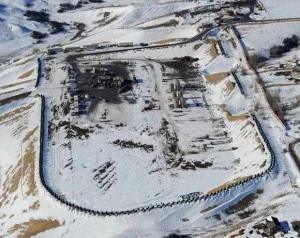
Bakken Well Pad
Bakken Well Pad

Bakken production slipped in November for the first time in almost two years. Production was down a little more than 2% when comparing an equal 30 days from October to November. The culprit was likely the snowiest day in over 100 years. Parts of ND had several inches of snowfall on November 10th.

It's hard to move crews and trucks when there is that much snow on the ground and a lot of Bakken crude is gathered by trucks before it makes its way into pipelines and rail systems.

I suspect we'll see a bounce in December and continued growth in 2013. Remember the harsh winter of 2008-2009. Production was a little more than 200,000 b/d in December, but harsh conditions limited operations and production fell almost 20,000 b/d during the winter. It took until May of 2009 to make back the losses. This dip won't be as serious, but if the snow keeps coming you shouldn't be surprised by seasonal dips.

While the Bakken rig count is down 20% from its peak, we don't believe that is enough to cause this decline. More than 200 wells were permitted in November and well spuds peaked in December. More than 290 wells were spud during December 2012. That's almost 40 more wells than the average for 2012. More well spuds with fewer rigs? Sounds like we're about to see just how efficient operators can be as pad drilling expands.

Oneok's Bakken Processing Is Expanding - Garden Creek III Plant

Oneok Bakken Investments

Oneok Partners announced plans to invest more in Bakken processing infrastructure in North Dakota.The company will spend $325-360 million to build the Garden Creek III plant in McKenzie County, ND. The plant will be built near the 100 mmcfd Garden Creek I and the 100 mmcfd Garden Creek II plants.

Oneok has already spent or has plans to spend $2.1-2.3 billion on natural gas processing and gathering investments related to the Bakken. The latest round of projects also includes expansion of NGL facilities in Kansas that will allow the company to handle even greater volumes of Bakken liquids. Total Bakken investments for Oneok will easily exceed $2.5 billion.

The partnership's previously announced Stateline II natural gas processing plant is expected to be in service during the first quarter of 2013. When completed, the natural gas processing capacities of the Garden Creek II and III plants, and the Stateline II plant combined with the existing Garden Creek, Stateline I and Grasslands natural gas processing facilities will be 590 mmcf/d in the Williston Basin.

This will be the sixth plant planned/operated in the Williston Basin by Oneok:

  1. Grasslands (90 mmcfd)
  2. Garden Creek I (100 mmcfd) online December 2011
  3. Stateline I (100 mmcfd) completed September 2012
  4. Stateline II (100 mmcfd) expected completion Q1 2013
  5. Garden Creek II (100 mmcfd) expected completion Q3 2014
  6. Garden Creek III (100 mmcfd) expected completion Q1 2015

Hess's Bakken Spending Down $900 million in 2013 to $2.2 Billion

Hess Bakken Map
Hess Bakken Map

Hess Corporation's Bakken spending is set for $2.2 billion in 2013. That's almost 33% of the company's entire budget, but down from the $3.1 billion that was spent in 2012. Company-wide spending will drop to $6.7 billion in 2013 from $8.3 billion in 2012.

Greg Hill, President of Worldwide E&P, stated, "Our expenditures in the Bakken are planned to be $2.2 billion in 2013 versus approximately $3.1 billion in 2012. This reduced level of spend is driven by lower well costs associated with our transition to pad drilling from hold by production mode and decreased investments in infrastructure projects. In addition, we plan to increase our expenditures in the emerging Utica shale play to $400 million from $300 million last year."

Hess did spend $750 million on infrastructure in 2012, so that could very well be the bulk of the decline. Details for infrastructure spending in North Dakota in 2013 were not provided. Lower spending is also the result of cost savings that will be realized from pad drilling. Well cost dropped almost 30% from $13.4 million in the first quarter of 2012 to $9.5 million in the third quarter of the year. Add spending less on infrastructure and the costs savings being realized on the development side and the results is much less spending, with similar activity.

Hess will operate 14 rigs in 2013. That's down from 16 in 2012.

The company operates the bulk of its acreage and has an average 67% working interests in approximately 800,000 net acres.